
Prefabricated vs Traditional Concrete Pump Houses: Differences and Benefits
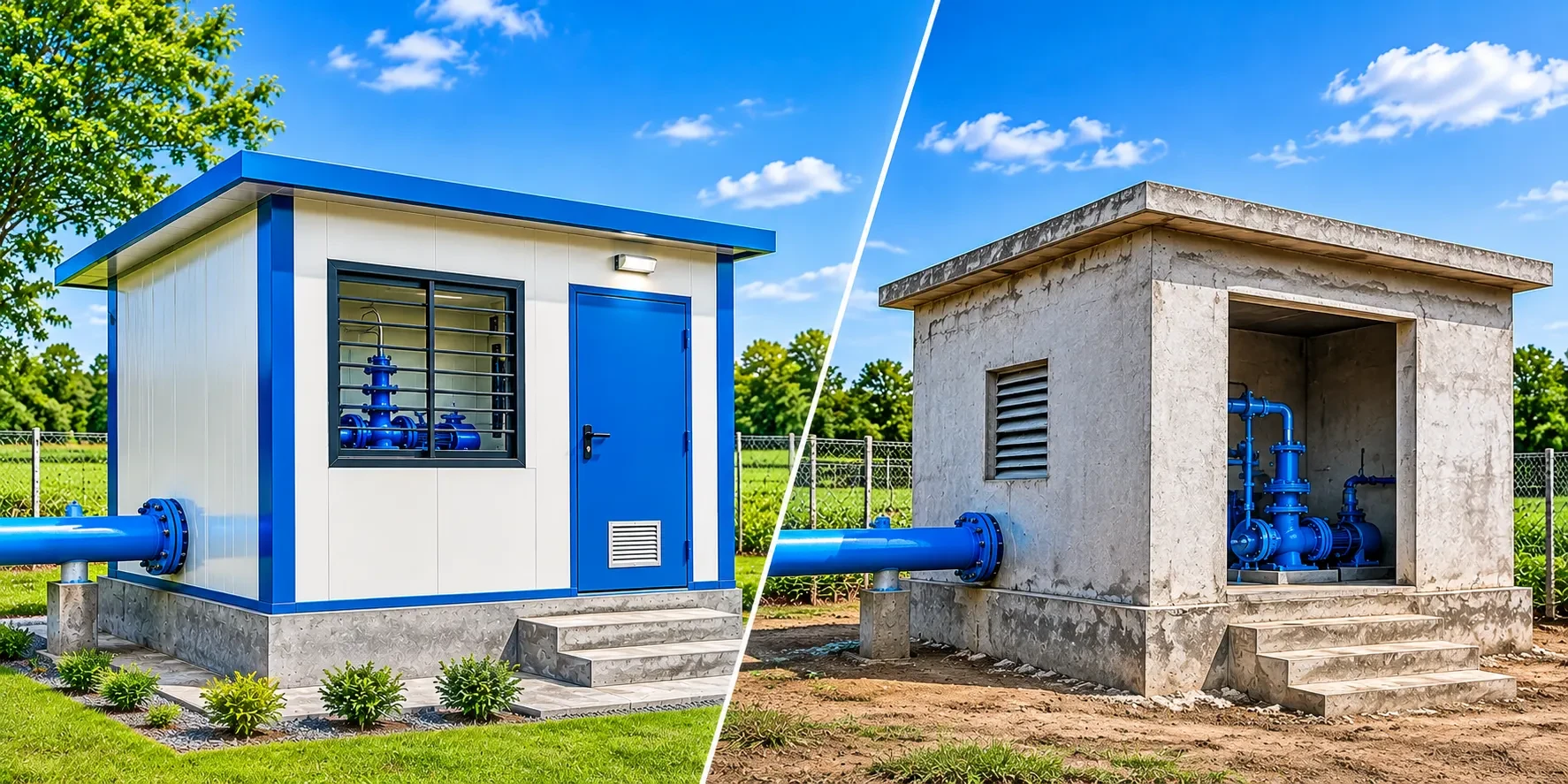
A pump house protects pumps, electrical equipment, and control systems while providing space for inspection and maintenance. Traditionally, these structures are built on site using concrete, with construction done around the project’s layout and requirements. Prefabricated pump houses offer an alternative, as major structural components are manufactured and transported to the site for installation. Both options have distinct benefits in terms of construction time, durability, cost, and design flexibility. Understanding these differences helps engineers, contractors, and project owners select the right option for their needs. This comparison looks at prefabricated and traditional concrete pump houses across the key factors that influence project decisions.
Understanding Prefabricated Pump Houses and Traditional Concrete Pump Houses
A traditional concrete pump house is constructed on site. The work involves preparing the foundation, fixing reinforcement, casting columns, walls, and the roof slab, followed by plastering, painting, and fitting doors and other openings. Some designs use masonry walls with a concrete roof. The finished structure is permanent and built according to the project's drawings and specifications.
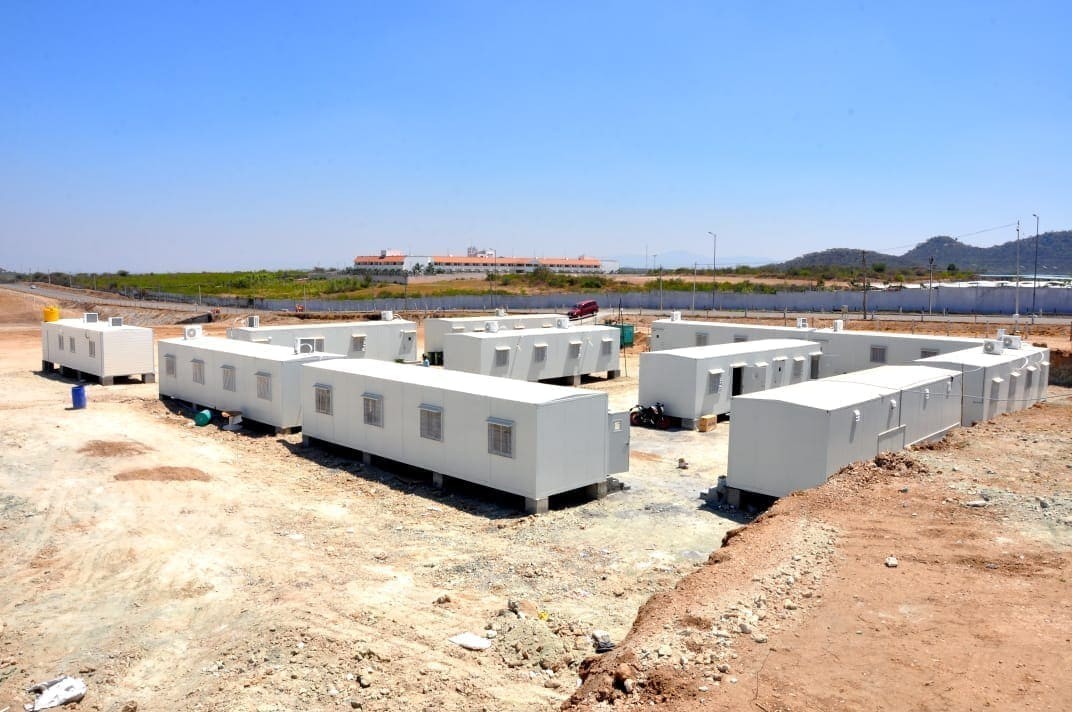
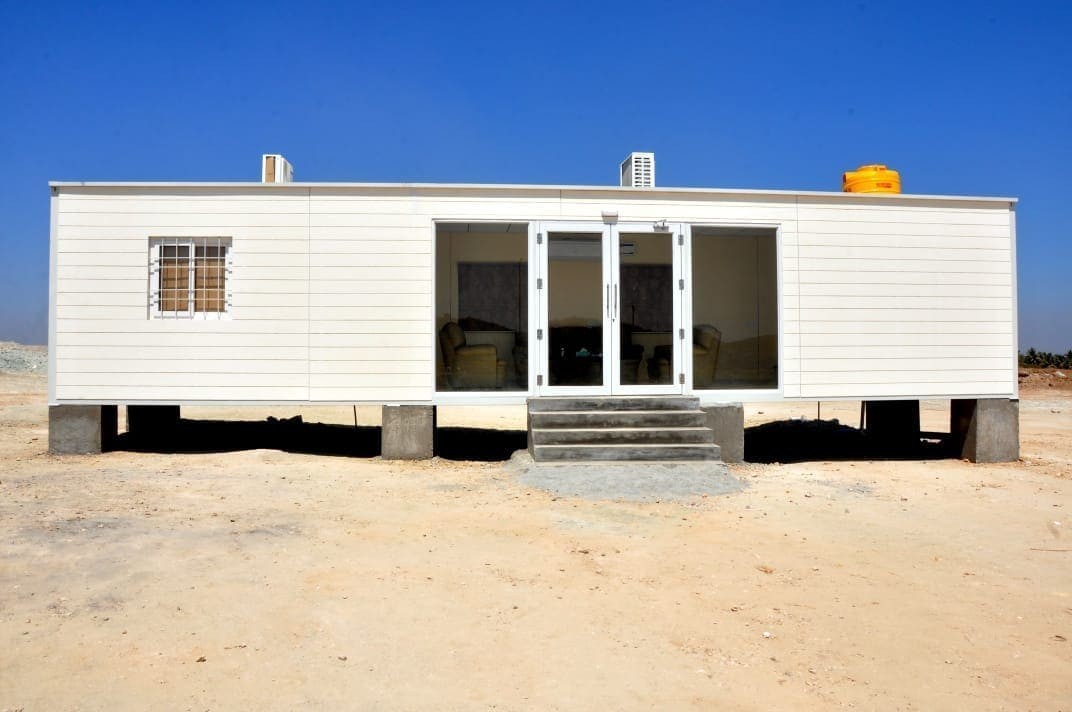
A prefabricated pump house is manufactured in a factory to the same dimensions and specifications, then transported and installed on a prepared base. The structure, doors, ventilation openings, and often the internal fittings are completed before being transported to the site for installation on a prepared base. Precast concrete structures offer a middle option. They are made from concrete but cast in a factory, providing some of the time-saving benefits of prefabrication.
Construction Process and Installation: Prefabricated vs Concrete Pump Houses
The construction process differs between traditional concrete and prefabricated pump houses, particularly in how much work is carried out on site. These differences affect installation time, labour requirements, and quality checks.
| Stage | Traditional concrete | Prefabricated |
| Materials | Cement, steel, sand, aggregate, and water brought to site | Delivered as a finished unit or in sections |
| Structure | Built and cured in place, often in several phases | Fabricated in a factory while the site is prepared |
| Weather exposure | High, because curing and plastering depend on conditions | Low, because most work is indoors |
| Skilled labour | Masons, bar benders and finishers needed on site | A smaller team for foundation, lifting and connections |
| Quality control | Varies with crew and conditions | Checked at the factory before dispatch |
A prefabricated unit still needs a designed foundation, an access route for the delivery vehicle, and equipment to lift it. Manufacturers of packaged pumping systems also report that factory testing before delivery shortens fabrication time and reduces start-up problems in the field.
Structural Durability and Protection of Pumping Equipment
Concrete pump houses offer strong protection against physical damage, fire, and vandalism. Their weight also helps reduce noise, making them suitable for installations near residential areas. A concrete structure can also accommodate lifting beams or removable roof sections for pump maintenance and replacement.
Prefabricated pump houses use sealed joints, corrosion-resistant materials, and protective coatings to protect the equipment from rain, dust, and rust. Ventilation louvres and insulated panels help manage heat around motors and electrical panels. Reliable prefabricated pump manufacturers in India use durable, corrosion-resistant materials suited to marine and tropical conditions. Both structures require regular maintenance. Concrete needs proper waterproofing to prevent cracks and leaks, while steel structures need periodic coating inspections.
Cost Comparison: Prefabricated Pump Houses vs Traditional Construction
The total cost of a pump house includes more than the structure. Excel Fluid Group, a US pump station manufacturer, compared the costs of a packaged pump station and a field-assembled station, both measuring 8 feet in diameter and 30 feet deep. The packaged option had a higher component cost of $320,000, compared with $228,350 for field assembly. However, on-site costs were lower for the packaged unit at $19,200, against $92,950 for field assembly. These costs covered labour, shoring, dewatering, electrical work, testing, and supervision. The final totals were $339,200 and $348,300, respectively.
This example is based on a buried wastewater station, not a rural pump house in India, so the figures may not apply directly. This comparison shows how doing more work before delivery can reduce the time, labour, and equipment needed at the site. When comparing the two options, consider the full installation cost, including the foundation, transport, lifting, and electrical work.
Installation Time and Project Flexibility
In the same Excel Fluid comparison, a packaged station can be installed and connected in about a day, while field assembly can take a week or more and require four workers for about a month. Concrete pump houses also take longer to complete because they involve foundation work, casting, curing, and finishing. Rain or late material deliveries can extend the construction time.
Another advantage of prefabricated structures is that they can be dismantled and moved if the borewell dries up, the scheme changes, or the pump station needs a new location. A concrete pump house is more permanent, making it suitable for installations where the location is unlikely to change.
Factors to Consider When Choosing the Right Pump House Structure
The choice between a prefabricated and a traditional concrete pump house depends on the site and project requirements. Consider the following points before deciding which structure is more suitable.
- How difficult is the site to reach, and how long can the crew stay there?
- How tight is the schedule, and how much of the rainy season will the build cover?
- Will the pump station remain in one place for decades, or might it move?
- How large is the equipment, and does it need internal cranes or removable roof sections?
- Are noise, fire resistance, or vandalism the main concern?
- What coatings or materials suit the local climate, such as humidity, salt air, or extreme heat?
- Does the design meet the specifications set by the water department or scheme?
- What is the complete installed cost, including foundation, transport, and electrical work?
When access is poor, time is short, or the site may change, a prefabricated house is usually the better choice. Where the structure must be very heavy, acoustically massive, or fully integrated with deep civil works, concrete or precast concrete may still be the better fit.
Pressmach: Your Partner for Custom Prefabricated Pump Houses
Choosing the right manufacturer is an important part of planning a prefabricated pump house. Pressmach has manufactured prefabricated structures in India since 1985 and reports more than 4,500 contracts for around 150 clients in India and abroad. Our team handles architecture, site planning, and exterior design, selecting materials suited to different climatic conditions. With a presence across India, Pressmach can design a structure around your site, equipment, and schedule. This is useful when installation time, site access, and equipment protection are important considerations. Our team can review your pump house requirements and help finalise a suitable design. If you are comparing options for a pump house, talk to our team about your requirements, or contact Pressmach online.
Your Requirements
Related
Blogs
Why Prefabricated Pump Houses Are Ideal for Remote and Rural Sites

How Prefab Buildings Can Help You Earn Green Building Ratings (IGBC/GRIHA)

How Tensile Roofing Structures Improve Bus Terminal Infrastructure

How Tensile Roofing Structures Reduce Swimming Pool Maintenance
Benefits of Tensile Roofing Structures for Modern Agriculture
How to Maintain Tensile Roofing Structures
Benefits of Tensile Roofing for Industrial Projects

Can Tensile Structures Handle Heavy Rain and Strong Wind Loads

Questions to Ask Before Choosing a Prefabricated Farmhouse Manufacturer
How Long Does it Take to Install a 10,000 sq ft Prefab Warehouse in India?
How Pressmach Delivered a 50-Bed Hospital in Just 90 Days

How Educational Institutions Are Using Portable Classrooms to Handle Enrollment Pressure
Can a Prefab Structure Be Installed During Monsoon or Do You Have to Wait It Out?
How to Install Solar Panels on Prefabricated Rooftop Structures
Tensile Roofing Structures for Outdoor Storage Yards: What Material Holds up to Indian Weather?

What Makes Prefab Quality Control Rooms Ideal for Manufacturing Facilities?

How Portable Workmen Accommodation Improves Site Productivity
How Prefabricated Buildings Help Reduce Project Delays?
What Are Prefabricated Hospitals and When Are They the Right Choice?

Why Tensile Membrane Structures are the Future of Modern Architecture in India
What Are the Advantages of Prefab Toilets Over Conventional Toilets?
How PUF Panels Improve Cooling Efficiency in Warehouses and Cold Rooms
Why Tensile Roofing Solutions Outshine Traditional Roofing Options
Top Industries that Benefits from Prefabricated Structures
The Rise of Prefabricated Construction in India: Benefits and Challenges
Why You Should Conduct Soil Testing Before Building a Prefab Modular Home
How Pressmach is India's Leading Prefabricated Building Manufacturer
How Tensile Architecture Combines Sustainability with Striking Design

Rising Demand and Future Growth of the Solar Mounting Structures Market
Why Are Prefabricated Site Offices a Smart Choice?
Why Businesses are Turning to PEB Building Construction in 2025

Why PUF Panels Are the Best Choice for Prefabricated Construction

Acoustic Enclosures vs Industrial Enclosures: What’s the Difference and Why It Matters

Solar Panel Orientation and Tilt Angle: How Mounting Structures Play a Role

Rise of Prefabricated Data Centers in India’s Digital Boom

Can Prefabricated Structures Withstand Seismic Shocks?

How LGSF is Revolutionizing Affordable Housing in India

Role of Prefabricated Warehouses in Modern Business Storage Solutions

The Future of AI in Prefabricated Construction

10 Major Advantages of Prefabrication in Modern Construction Projects

Advancements in Prefabricated Materials: What to Expect in 2025
6790c3d8f29a2.jpeg)
The Role of Prefabrication in Disaster Relief and Emergency Housing

Tips for Preparing Your Site for a Prefabricated Structure

Are Modular Prefab Homes Suitable for Extreme Weather Conditions

Uses Of Peb Structure In Residential Spaces

Trends and Innovations in Prefab Commercial Buildings

Top Benefits of Modular Office Space in 2024

Prefabricated Homes vs Traditional Homes

Benefits of Having Modular Prefabricated Cold Storage Solutions

How is Prefab Modernising India’s Ageing Industrial Spaces

How Modular Construction Improves Accessibility in Remote Areas

How to Choose the Right PUF Panels for Your Prefab Building

Types of Pre-engineered Buildings Used in Different Industries

Pre-Monsoon Checklist For PEB Buildings

Uses of Portable Cabins in Disaster Relief

Top Uses for Portable Cabins

Advantages of Portable Security Cabins

Why are Eco-friendly Prefab Homes a Better Choice

Insulation and Passive Technology Benefits of Prefab Modular Buildings

Why is Prefab Construction Greener than RCC Construction

Securing Modular and Prefabricated Buildings: Essential Tips

Benefits of Modular Construction in Healthcare

Factors To Consider Before Buying A Prefabricated Warehouse Building

Benefits of Portable Labour Accommodation Manufacturer

Reasons To Choose Portable Cabins

Myths And Facts About Portable Office Buildings

Innovative Uses Of Modular Buildings
Benefits Of Modular Cleanroom
Advantages Of Pre-Engineered Factory Buildings
65cf4d38697f9.webp)


65cf65f046eed.webp)


64afe3444467b.jpeg)

Importance Of Having Portable Toilets On-Site

Why Prefab Solutions are Ideal For Schools In Rural Areas?
What Is The Difference Between Precast And Prefabricated Buildings?

How LGSF Building Helps In Rapid Construction

Important Things To Look For In a Prefab Company
How Long Does A Prefab Structure Last
 site office front view622f00119ba65.jpg)
9 Benefits Of Choosing Portable On Site Office

Building Materials Used for Modular Construction
6349487807893.jpeg)
Modular Home Construction: Pros and Cons