
How Educational Institutions Are Using Portable Classrooms to Handle Enrollment Pressure
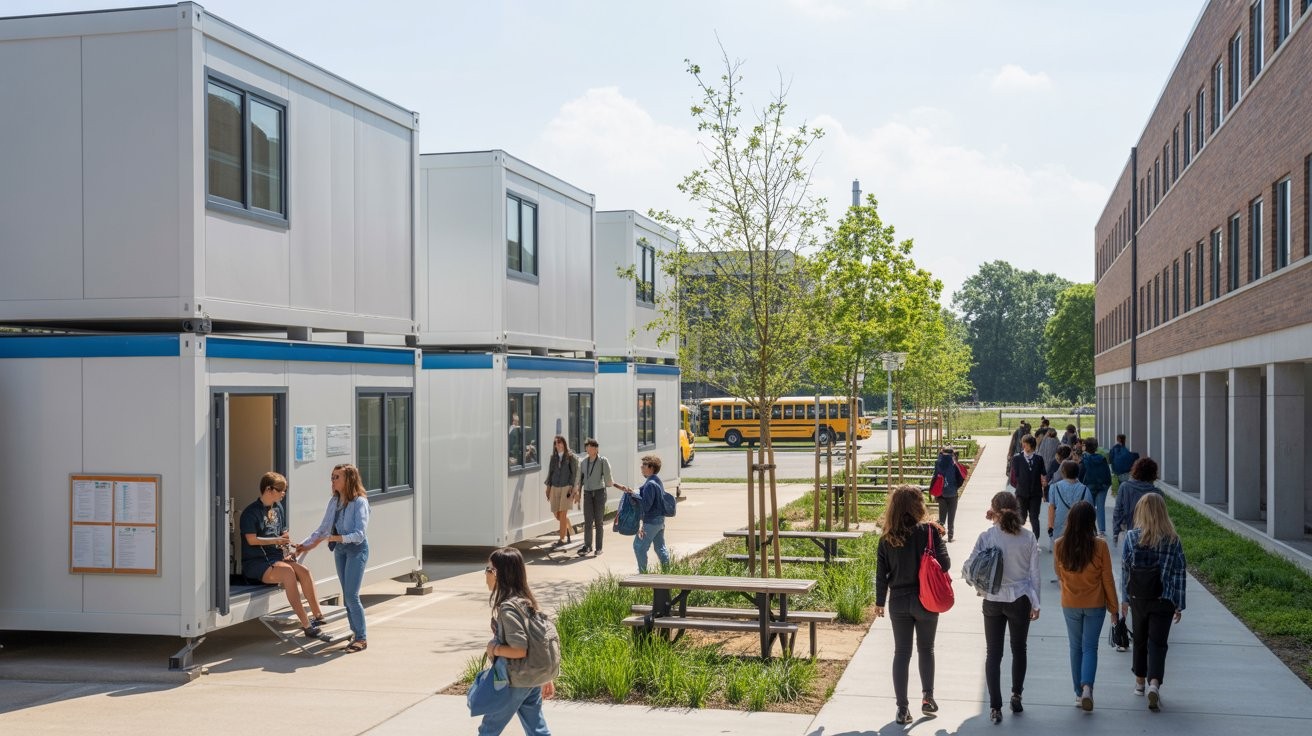
Each year, the number of educational institutions across India continues to increase at an exceptionally rapid rate. However, they are facing a growing problem with space. While admissions continue to rise across schools and colleges across the nation, new programs and classes are being introduced faster than ever. Because of these growing numbers, institutions are under immense pressure to accommodate more students, and that too without having to disrupt the ongoing academic operations. The real problem here is that developing new academic blocks via conventional construction methods comes with approval delays, compliance efforts, labor coordination, budget constraints, and unforeseen project delays.
While there are countless solutions for this national problem, only a few of them provide speed and flexibility. Out of these options, portable classrooms and prefabricated schools stand out as the most practical solution. They can be used to expand the existing classroom spaces without disrupting any classes or academic processes and manage all the requirements smoothly. Due to the increased appeal for prefabricated structures, they are gradually becoming the standard option across educational organizations in India.
In this blog, we will explore the phenomenon of modular classrooms and how they can be employed to handle enrollment pressure.
The Enrollment Gap Problem in India
Today, almost all educational institutions across India are dealing with an imbalance between student intake and existing classroom infrastructure capacity. Schools and colleges, among other educational institutions, are forced to expand to accommodate the approved intake. However, building new academic infrastructure the traditional way is rarely straightforward. Approvals take time, budgets stretch, labor is hard to coordinate, and the construction itself can drag on for months. By the time a new block is ready, the next intake cycle has already arrived. Here are some of the real on-ground factors that keep widening this gap:
Limited Campus Space: Most urban institutions are already working within tight land boundaries. There is simply no room to launch a full-scale construction project without eating into playgrounds, parking, or corridors that the campus depends on every single day.
Disruption to Academic Activities: Construction noise, dust, restricted movement, and safety hazards around an active campus are not minor inconveniences. They directly affect how students learn and how teachers operate, especially during examination periods.
Temporary Classroom Requirements: When an existing block goes in for renovation, the institution still needs to run classes somewhere. That intermediate period is where many campuses struggle, patching together makeshift arrangements that are neither comfortable nor practical.
Faster Expansion After Approvals: Affiliation approvals and intake increases often arrive with short lead times. The institution gets the green light but has nowhere near enough time to build conventional classrooms before the academic year begins.
Need for Flexible Learning Spaces: Campus needs shift over time. A space that works as a lecture hall today may need to function as a lab or faculty room tomorrow. Rigid construction makes that kind of adaptability expensive and slow.
An Overview of Portable Classrooms
A portable classroom is essentially a prefabricated structure that is designed to accommodate students and provide all the facilities and conveniences of a learning environment. Unlike other spaces such as sheds or basic site cabins, modern modular classrooms are specifically designed with academic needs and properly equipped for regular academic uses.
Like standard prefabricated structures, prefabricated school structures are manufactured off-site in controlled factory environments. Depending on particular institutional requirements, they can be specified to be shaped into classrooms, laboratories, staff rooms, administrative offices, libraries, training halls, washrooms, or even complete prefab school blocks. As the majority of the constitution work happens off-site at the factory, the installation time required is minimal compared to conventional methods.
What makes modern portable classrooms the ideal choice is that they are built to provide insulation, ventilation, lighting systems, electrical fittings, and academically friendly interior layouts. To summarize, they come perfectly suited for student comfort and day-to-day academic operations. Additionally, institutions also have the provision to customize these spaces based on age groups, seating capacity and preferences, climate conditions, and accessibility needs.
How Schools and Colleges Are Adopting Modular Classrooms
Now that we’ve observed how modular classrooms work and why they are beneficial, let us take a look at how schools and colleges, among other educational organizations, implement portable classrooms across India:
Addition of New Grade or Section During Mid-Acacemic Year
In many cases, schools often experience unexpected enrollment increases and transfers after the beginning of the academic year. Instead of overcrowding existing classrooms or rejecting admissions and transfers, institutions now implement modular classrooms to quickly adopt additional sections. Portable classrooms can be installed instantly and integrated into existing school architecture without any disruptions.
College Intake Increase After AICTE Approval
Engineering and technical institutions had to typically limit their branches to 240 students per batch. However, as of the 2024-2025 academic session, the All India Council for Technical Education or AICTE, has removed the upper limit on seat intake for existing well-performing institutions. These institutions often receive approval for additional student intake or new departments within limited periods. To keep up with the requirements, colleges and institutions use prefabricated structures for creating lecture halls, labs, and faculty spaces quickly so they can begin operations without waiting for permanent blocks to be completed.
Educational Institutions Undergoing Renovations or Expansion
If an existing academic block requires renovations or expansions, the organization must do the work without disruptions as well as provide alternative spaces. Portable classrooms can be used as temporary yet fully functional spaces that provide all the conveniences and requirements until the completion of the developments. Once the work is completed, these modular classroom structures can be relocated or repurposed across the campus as required.
Key Advantages of Using Modular Classrooms
When an institution needs more space and cannot afford to wait, modular classrooms are genuinely one of the most practical tools available today. Here is what makes them work in real academic settings:
Faster response to sudden space demand: When a school receives unexpected enrollment transfers mid-year or a college gets an intake approval with a tight deadline, there is no time for a conventional construction schedule. Prefab classrooms can be manufactured, delivered, and made ready for students in a fraction of that time.
Continuity of academic operations: Because the bulk of the work happens at the factory, the campus itself stays largely undisturbed. Classes run, exams happen, and daily routines continue while the new structure takes shape off-site.
Adaptability across academic use cases: These are not fixed, single-purpose spaces. A unit that serves as a classroom this semester can just as easily become a computer lab, a faculty room, or an exam hall when the institution needs it to. The structure changes with you rather than forcing you to build again from scratch.
Controlled project planning: Because the components are built to a set design at the factory, institutions know what they are getting, what it will cost, and when it will be ready. That level of clarity is hard to come by in conventional construction, where one delayed material delivery or a spell of bad weather can push the entire timeline back by weeks.
Proper use of available campus space: Portable units can be placed within existing campus layouts, on rooftops, in courtyards, or alongside existing blocks without requiring major structural changes to what is already there.
Consistent learning environment standards: A prefab classroom is not a compromise. Modern units are designed with proper ventilation, lighting, and insulated panel systems that meet the same everyday comfort standards students expect from a permanent classroom
Checklist For Finalizing a Portable Classroom Project
As the appeal for modular structures continues to grow, there is a growing number of companies in the national market providing these solutions. This is why it is important to evaluate a number of practical factors to make sure that the choice you make supports long-term academic use. The main elements to check are as follows:
Structural Quality and Durability: Educational buildings are structures that are continuously used. To make sure that the structures can withstand such usage, institutions should verify material quality, structural strength, weather resistance, and expected lifespan before finalizing the portable classroom project.
Indian Compliance and Safety Standards: A classroom is a high-occupancy space used by students every single day. Before finalizing any prefab classroom project, institutions should confirm that the structure meets applicable building codes, fire safety norms, electrical standards, and any specific compliance requirements tied to their affiliation body. This is not optional.
Ventilation and Student Comfort: A classroom that gets too hot or too stuffy by mid-morning affects concentration before the first period is over. Evaluate insulation quality, airflow design, natural light availability, acoustic performance, and thermal comfort as part of your review, not as afterthoughts.
Provision for Future Expansion: Today you may need two additional classrooms. In three years it might be five. Choosing a modular system that allows you to add units or reconfigure layouts later means you are not starting from scratch every time the campus grows.
Vendor Experience in Educational Infrastructure: A prefab structure built for a warehouse or a site office operates very differently from one designed for daily student use. Work with a provider who has actually delivered school and college infrastructure before and understands what academic environments demand in terms of layout, durability, and usability.
Pressmach - Your Reliable Partner for Prefabricated Classroom Solutions
At Pressmach, four decades of working alongside schools, colleges, and training institutions across India have given us a clear understanding of what educational spaces actually demand. Not just in terms of structure, but in terms of how a campus breathes, functions, and grows over time. That understanding is what we bring to every portable classroom project we take on
We do not supply generic prefab units and leave the rest to you. We work with your institution to understand your space, your academic calendar, your compliance requirements, and your long-term expansion plans, then build around all of that. That depth of experience in the prefab industry has shown us that every campus operates differently,and a solution that works for one institution may not serve another. Every structure we deliver is designed for the way institutions actually function, not just how they look on a layout drawing.
If your institution is facing enrollment pressure and conventional construction is not a realistic option right now, we can help you move faster without cutting corners. Reach out to our team to discuss your requirements and explore the right portable classroom solution for your campus.
Your Requirements
Related
Blogs

How Prefab Buildings Can Help You Earn Green Building Ratings (IGBC/GRIHA)
How Tensile Roofing Structures Improve Bus Terminal Infrastructure

How Tensile Roofing Structures Reduce Swimming Pool Maintenance

Benefits of Tensile Roofing Structures for Modern Agriculture
How to Maintain Tensile Roofing Structures
Benefits of Tensile Roofing for Industrial Projects

Can Tensile Structures Handle Heavy Rain and Strong Wind Loads
Questions to Ask Before Choosing a Prefabricated Farmhouse Manufacturer
How Long Does it Take to Install a 10,000 sq ft Prefab Warehouse in India?
How Pressmach Delivered a 50-Bed Hospital in Just 90 Days
Can a Prefab Structure Be Installed During Monsoon or Do You Have to Wait It Out?
How to Install Solar Panels on Prefabricated Rooftop Structures
Tensile Roofing Structures for Outdoor Storage Yards: What Material Holds up to Indian Weather?

What Makes Prefab Quality Control Rooms Ideal for Manufacturing Facilities?

How Portable Workmen Accommodation Improves Site Productivity
How Prefabricated Buildings Help Reduce Project Delays?
What Are Prefabricated Hospitals and When Are They the Right Choice?

Why Tensile Membrane Structures are the Future of Modern Architecture in India
What Are the Advantages of Prefab Toilets Over Conventional Toilets?
How PUF Panels Improve Cooling Efficiency in Warehouses and Cold Rooms
Why Tensile Roofing Solutions Outshine Traditional Roofing Options
Top Industries that Benefits from Prefabricated Structures
The Rise of Prefabricated Construction in India: Benefits and Challenges
Why You Should Conduct Soil Testing Before Building a Prefab Modular Home
How Pressmach is India's Leading Prefabricated Building Manufacturer
How Tensile Architecture Combines Sustainability with Striking Design

Rising Demand and Future Growth of the Solar Mounting Structures Market
Why Are Prefabricated Site Offices a Smart Choice?
Why Businesses are Turning to PEB Building Construction in 2025

Why PUF Panels Are the Best Choice for Prefabricated Construction

Acoustic Enclosures vs Industrial Enclosures: What’s the Difference and Why It Matters

Solar Panel Orientation and Tilt Angle: How Mounting Structures Play a Role

Rise of Prefabricated Data Centers in India’s Digital Boom

Can Prefabricated Structures Withstand Seismic Shocks?

How LGSF is Revolutionizing Affordable Housing in India

Role of Prefabricated Warehouses in Modern Business Storage Solutions

The Future of AI in Prefabricated Construction

10 Major Advantages of Prefabrication in Modern Construction Projects

Advancements in Prefabricated Materials: What to Expect in 2025
6790c3d8f29a2.jpeg)
The Role of Prefabrication in Disaster Relief and Emergency Housing

Tips for Preparing Your Site for a Prefabricated Structure

Are Modular Prefab Homes Suitable for Extreme Weather Conditions

Uses Of Peb Structure In Residential Spaces

Trends and Innovations in Prefab Commercial Buildings

Top Benefits of Modular Office Space in 2024

Prefabricated Homes vs Traditional Homes

Benefits of Having Modular Prefabricated Cold Storage Solutions

How is Prefab Modernising India’s Ageing Industrial Spaces

How Modular Construction Improves Accessibility in Remote Areas

How to Choose the Right PUF Panels for Your Prefab Building

Types of Pre-engineered Buildings Used in Different Industries

Pre-Monsoon Checklist For PEB Buildings

Uses of Portable Cabins in Disaster Relief

Top Uses for Portable Cabins

Advantages of Portable Security Cabins

Why are Eco-friendly Prefab Homes a Better Choice

Insulation and Passive Technology Benefits of Prefab Modular Buildings

Why is Prefab Construction Greener than RCC Construction

Securing Modular and Prefabricated Buildings: Essential Tips

Benefits of Modular Construction in Healthcare

Factors To Consider Before Buying A Prefabricated Warehouse Building

Benefits of Portable Labour Accommodation Manufacturer

Reasons To Choose Portable Cabins

Myths And Facts About Portable Office Buildings

Innovative Uses Of Modular Buildings
Benefits Of Modular Cleanroom
Advantages Of Pre-Engineered Factory Buildings
65cf4d38697f9.webp)



65cf65f046eed.webp)


64afe3444467b.jpeg)
Importance Of Having Portable Toilets On-Site
Why Prefab Solutions are Ideal For Schools In Rural Areas?
What Is The Difference Between Precast And Prefabricated Buildings?

How LGSF Building Helps In Rapid Construction

Important Things To Look For In a Prefab Company
How Long Does A Prefab Structure Last
 site office front view622f00119ba65.jpg)
9 Benefits Of Choosing Portable On Site Office

Building Materials Used for Modular Construction
6349487807893.jpeg)
Modular Home Construction: Pros and Cons