
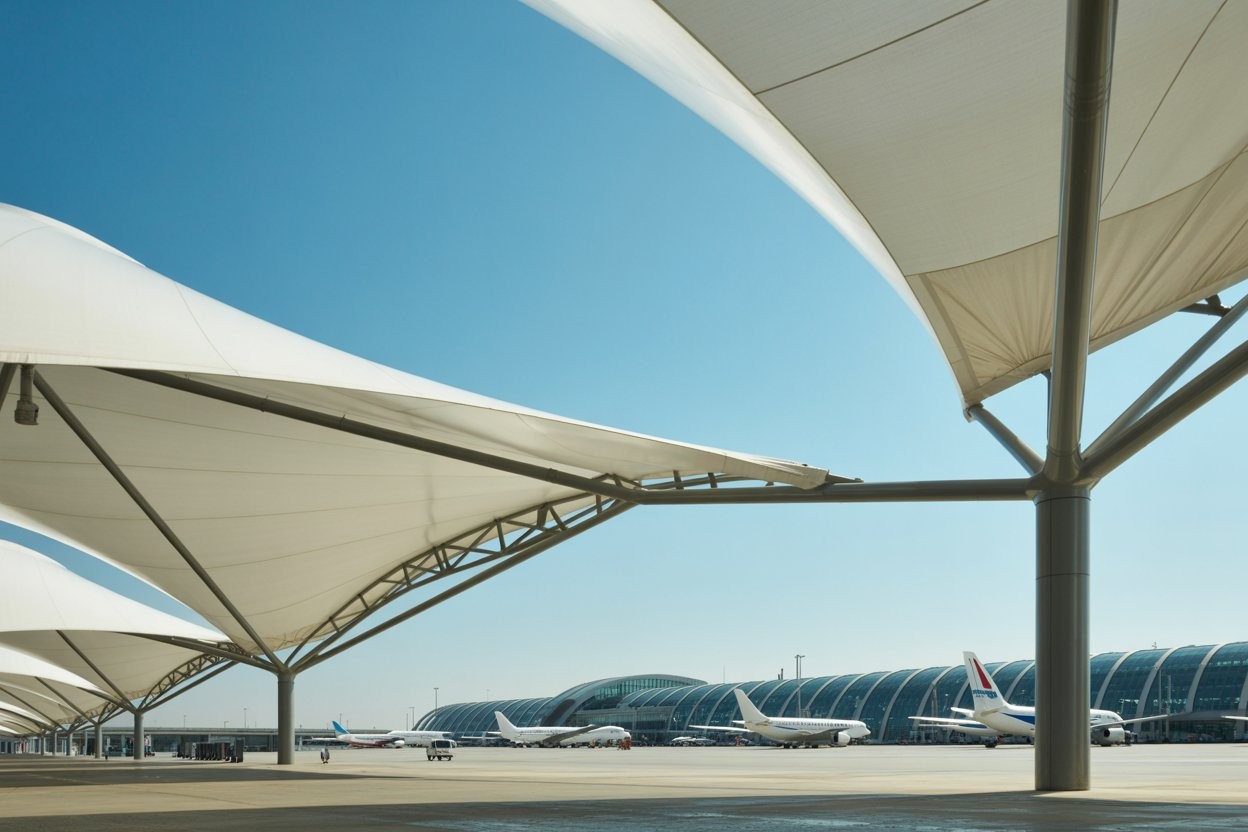
Airport Tensile Membrane Structure Manufacturers
Airports handle thousands of passengers daily across terminals, walkways, drop-off zones, and parking areas. All of these spaces need durable, large-span coverage without disrupting ongoing operations. Tensile membrane structures are purpose-built for exactly this. Pressmach designs, engineers, and installs airport tensile membrane structures across India, delivering solutions that are lightweight, weather-resistant, and fast to install without compromising on structural integrity or visual appeal.
Airport Tensile Membrane Structure Manufacturers
Transforming Airport Architecture with Tensile Membrane Structures from Pressmach

Today, tensile membrane structures are reshaping the way airports enforce sustainable and efficient architecture across India. The lightweight build, durability, and swift setup make them ideal for fast-paced spaces like airports. At the forefront of this transformation stands Pressmach, equipped with four decades of experience in designing, building, and installing prefabricated structures.
At Pressmach, we give the highest priority to safety through maximum structural integrity. This allows us to make sure that all spaces across the airport, from terminals and walkways to curbside canopies and passenger pick-up and drop-off zones, remain highly functional, protected, and visually warm and inviting.
Trust Pressmach for reliable and supreme expertise on the usage of tensile structures across airport spaces.
How we can help you!
Connect with us for breakthrough prefabrication solutions pan India...
Contact usOUR
CLIENTS
With a wide portfolio of clients from diverse industries, we always strive to surpass our customers' expectations, focusing on high-quality tailored solutions and on-time delivery.












Related
Industries



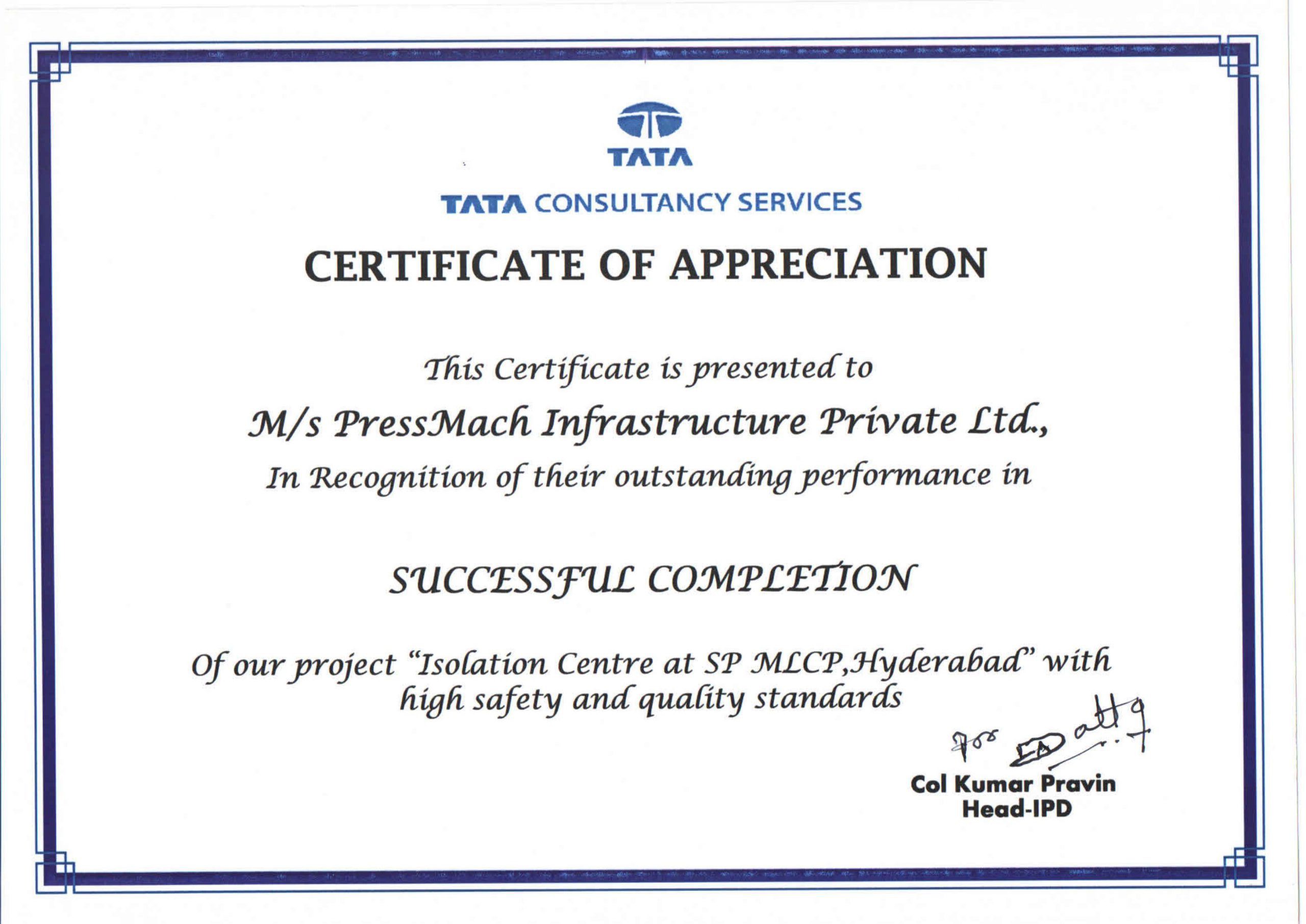
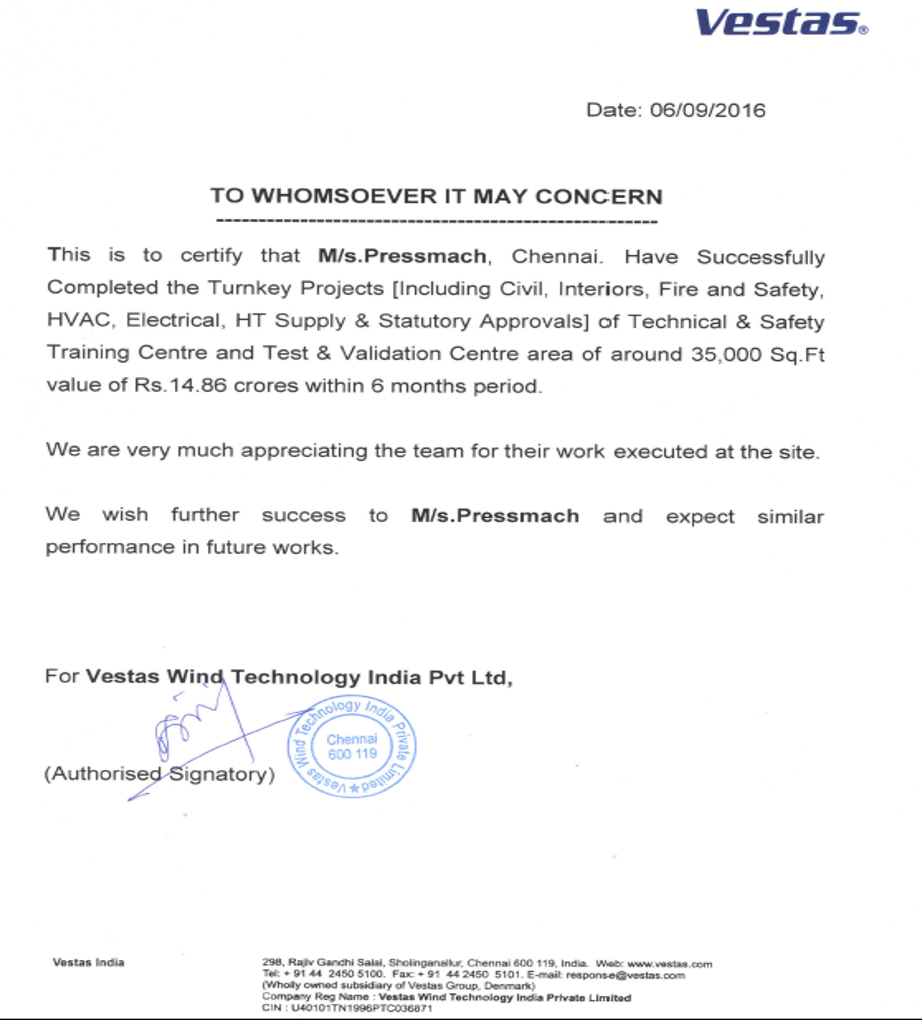
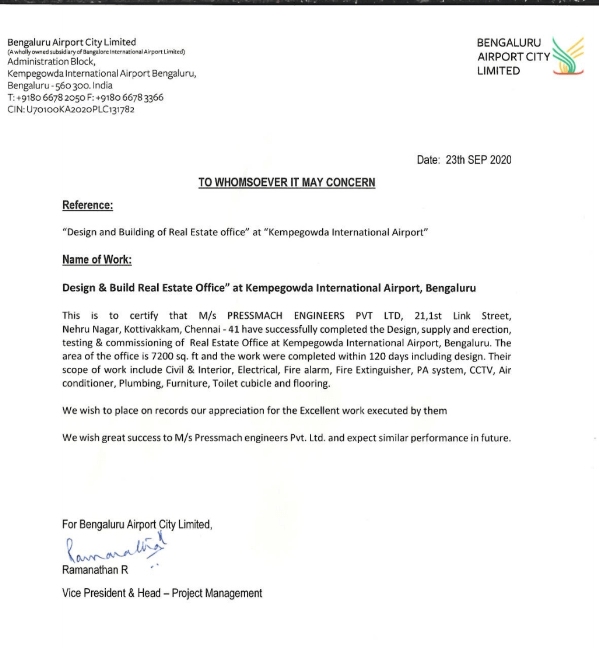
Appreciation
Certifications
FAQ's
Yes. All structures are engineered in accordance with applicable Indian structural safety standards. Our engineers carry out load calculations, wind analysis, and structural assessments before installation to ensure every structure meets the safety requirements for high-occupancy public spaces.
Yes. Since all components are prefabricated off-site, on-site work is limited to assembly, anchoring, and tensioning. Our teams are experienced in working within active airport environments, coordinating with airport schedules to ensure passenger movement and daily operations remain unaffected throughout installation.
We primarily use PVC-coated polyester and PTFE-coated membranes. PVC-coated polyester suits covered walkways, parking shades, and drop-off zones, while PTFE-coated membranes are used for terminal canopies and entrance structures where higher UV resistance and temperature tolerance are needed. The material is selected based on the zone, span, and environmental conditions of each project.
With proper maintenance, they typically last 20 - 30 years or more, depending on the fabric and environmental conditions.
Yes, they are very safe due to the strict engineering that goes into the processes. With strict load, wind, and safety calculations, tensile membrane structures are relatively safer than heavy and bulky concrete structures.
They are commonly used for terminals, walkways, drop-off zones, parking areas, and service or cargo bays.
While the installation process is relatively faster than conventional methods, the time taken varies as per the project size.
No. Their lightweight design reduces the load on foundations, making installation easier and more cost-effective.